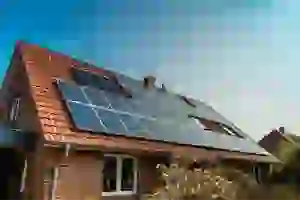

With the rapid expansion of the renewable‑energy industry worldwide, the production of solar panels has become one of the most important sectors of the energy industry. Today, dozens of major companies in various countries are engaged in designing and manufacturing photovoltaic panels, each using different technologies in an effort to offer higher efficiency, longer lifespan, and more competitive pricing. Understanding solar‑panel manufacturers and the differences between their products is highly important for investors and companies active in building solar power plants.
Leading solar‑panel manufacturers in the world
Currently, a large portion of global solar‑panel production is dominated by Asian companies, especially Chinese manufacturers. By heavily investing in technology and mass production, these companies have managed to capture a significant share of the global market.
One of the largest solar‑panel manufacturers in the world is **LONGi Solar**. This Chinese company focuses heavily on monocrystalline cell technology, and its products are widely used in many power‑plant projects due to their high efficiency and good quality.
**JinkoSolar** is also one of the world’s biggest photovoltaic‑panel manufacturers. The company has participated in many large‑scale solar‑power projects across different countries, and its products are well‑known for their reliability and performance under various environmental conditions.
**Trina Solar** is another well‑known brand in the solar industry that, in addition to panel manufacturing, also works on developing new solar‑cell technologies. The company is one of the pioneers in adopting advanced technologies to increase panel efficiency.
Other major companies in this sector include **Canadian Solar**, **JA Solar**, and **First Solar**, each holding a significant share of the global market, with their products used in various solar‑power‑plant projects.
Differences in solar‑cell technologies
One of the most important differences among solar‑panel manufacturers is the type of technology used in cell production. Most companies use silicon‑based cells, but the specific technology and structure of the cells can vary.
**Monocrystalline panels** generally have higher efficiency and are a better choice for projects with limited space. Many major global companies such as LONGi and JinkoSolar place strong emphasis on this technology.
In contrast, **polycrystalline panels** have lower production costs but usually slightly lower efficiency. With technological advances, the use of these panels has decreased in recent years, and many manufacturers have shifted toward monocrystalline technology.
Some companies, such as **First Solar**, use **thin‑film (Thin Film)** technology, which has a different structure from silicon panels and performs well under certain environmental conditions.
Differences in efficiency and power output
Another important difference among panels produced by various companies is the energy‑conversion efficiency and their power output. Modern solar panels typically have efficiencies ranging from around 20% to 23%.
Some companies have increased cell efficiency by using advanced technologies such as **PERC**, **TOPCon**, and **HJT**. These technologies allow solar cells to absorb more light and generate more energy.
Differences in build quality and lifespan
The quality of raw materials, manufacturing processes, and quality‑control standards are also important factors that differentiate solar panels. Products from reputable manufacturers typically have lifespans of more than 25 years and come with long‑term warranties.
Most major manufacturers offer two types of warranties:
* product warranty (usually 10 to 15 years)
* performance or output‑power warranty (typically up to 25 years)
Differences in applications and climatic conditions
Some solar panels are designed for specific climatic conditions. For example, in hot and dry regions where ambient temperatures are high, panels with lower temperature coefficients perform better. In areas with high humidity or strong winds, panels with higher mechanical strength are preferred.
Therefore, when selecting a solar panel for a power‑plant project, environmental conditions must be considered in addition to brand and price.
Conclusion
Different solar‑panel manufacturers use various technologies and production methods to offer products with higher efficiency, longer lifespan, and lower cost. Differences in cell types, manufacturing technology, raw‑material quality, and application conditions are among the key factors distinguishing these companies. Choosing the right panel for a solar‑power‑plant project requires careful evaluation of technical specifications, manufacturing quality, and the environmental conditions of the installation site to achieve optimal performance and maximum economic return.