
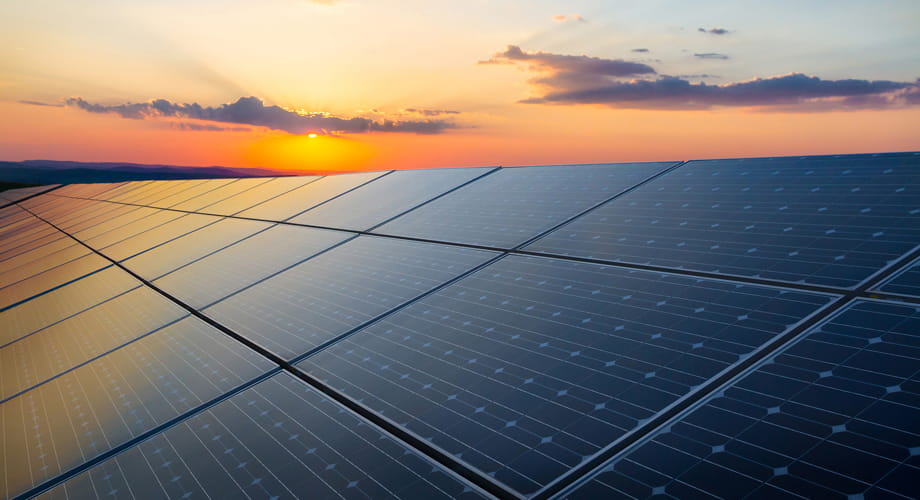
February 2026 has become a decisive month for the global solar energy industry.
This week’s news paints a multilayered picture of the future of this sector—one in which technological innovation, geopolitical shifts, and major regional investments are together redefining the boundaries of clean energy. From the revolution in solar panel materials and the move to eliminate silver, to the USD 2‑billion solar expansion of Turkey and Saudi Arabia, and China’s unprecedented record in adding renewable power capacity, the signals are clear: the world is accelerating toward a future in which the sun plays a central role.
For leading companies such as Energy Gostar Hooran Paya, understanding the depth of these transformations—and aligning them with Iran’s specific conditions—is the key to securing a strong position in the country’s rapidly expanding solar market.
Section One: A Materials Revolution – The End of Silver Dependence in the Solar Industry
One of the most significant technological developments in recent weeks is the rapid shift toward eliminating silver from solar panel manufacturing. Silver prices, which surged by 130% last year, have pushed panel manufacturers to seriously pursue cheaper alternatives. Silver paste—one of the most critical materials in photovoltaic (PV) cells—now accounts for around 30% of total solar cell production costs, placing serious pressure on manufacturers’ profit margins.
In response, global solar giants are rapidly transitioning to copper as a replacement. Chinese leader LONGi announced major advances in base‑metal metallization technology and aims to begin mass production of copper‑based solar panels this spring.
Industry analysts estimate that switching from silver‑based to copper‑based metallization could save the global solar sector approximately USD 15 billion annually.
Beyond cost reduction, this innovation could create a more stable supply chain because copper costs only 0.5% of the price of silver and is far less volatile.
Section Two: Regional Competition in the Middle East – A USD 2‑Billion Deal Between Turkey and Saudi Arabia
At the regional level, the USD 2‑billion solar cooperation agreement between Turkey and Saudi Arabia marks a major milestone. According to the agreement—signed during the Turkish president’s official visit to Riyadh—the two countries will jointly develop a 5,000‑MW solar project, with the first phase consisting of 2,000 MW in Turkey’s Sivas and Karaman provinces.
Turkey will purchase the generated electricity at a guaranteed price of 1.99 euro‑cents per kWh for 25 years.
The importance of this deal lies not only in its scale, but also in its regional implications. Turkey has set ambitious targets to expand renewable energy and aims to reach 120,000 MW of installed solar and wind capacity by 2035.
Saudi Arabia, meanwhile, is advancing its Vision 2030 program to diversify its economy and reduce oil dependency, positioning itself as a major cross‑border investor in clean energy.
This partnership signals a new wave of competition in the Middle East to attract capital and advanced solar technology—highlighting regional awareness of the strategic importance of this industry.
Section Three: China’s Record-Breaking Achievement – 543 GW of New Capacity in a Single Year
In East Asia, China once again demonstrated its unparalleled ability to expand its energy infrastructure. The country added 543 GW of new power generation capacity in 2025—exceeding the total installed capacity of many major nations.
Remarkably, China’s newly added capacity from 2021 onward has surpassed the entire U.S. power grid, which sits at around 1,000 GW.
Renewables have now reached a 47.3% share of China’s energy mix, and installed solar capacity grew 35.4%, reaching 1.2 terawatts.
These extraordinary figures show that China is not only keeping its climate commitments but also using clean energy as a driver of economic growth and energy security. Although China continues to develop coal plants in parallel, its renewable expansion is accelerating at an unprecedented rate.
Section Four: Iran on the Path of Transformation – From Solar Plants in Gas Facilities to a 15,000‑MW National Target
Encouraging developments are also emerging inside Iran.
The Iranian Gas Transmission Company has recently commissioned the first phase of its solar power plant—a 250‑kW system—at the Qom gas compressor station. This solar facility, an important step toward using clean energy in critical national infrastructure, is expected to recoup all installation costs within three years through electricity savings.
The company aims to reach 3 MW of solar capacity by the end of 1405 (2027), demonstrating a serious commitment to renewable energy integration.
Simultaneously, officials from SATBA (Renewable Energy and Energy Efficiency Organization) report major progress in national targets. With 750 MW of new solar capacity commissioned in recent weeks, Iran’s total installed solar capacity has reached 4,200 MW, and planning for a 15,000‑MW national target is underway.
Additionally, 5,000 MW of ongoing projects are scheduled to come online this year.
Conclusion: A Window of Opportunity for Iran
The simultaneous convergence of technological breakthroughs, regional investment momentum, and domestic capacity expansion has opened an exceptional window of opportunity for Iran’s solar industry.
- The elimination of silver and adoption of copper‑based technologies can significantly reduce panel production costs and reduce reliance on expensive raw materials.
- Middle Eastern competition to attract investment and build mega‑solar projects underlines the urgency for Iran to accelerate regulatory reforms and introduce strong incentives for investors.
- The country’s 15‑GW target provides a clear roadmap for development companies such as Energy Gostar Hooran Paya.
With strong domestic capabilities and smart adaptation of global technological and market trends, the future of solar energy in Iran can become one of the most successful chapters in the nation’s sustainable development story.
